"The Returnee..."

We are in the middle of a roller coaster of transition. We left Uganda on 1st July, and travelled to visit Dan's family in America... Now we arrive in England, where I have not lived since 1992, almost twenty years ago... I left young free and single, and return with an American husband and two children, aged 11 and 9... I hope to describe the experiences of "the Returnee", with, no doubt, flashbacks to our African life, and commentary from my children along the way...
Showing posts with label Cotswolds. Show all posts

Tuesday, 30 July 2013

Writing lessons from Laurie Lee


Most English schoolchildren are made to read "Cider With Rosie" and "As I Walked Out One Midsummer Morning" by Laurie Lee at some point in their gradual progress through English Literature. I remember quite enjoying the first, with its line sketches and descriptions of a boy growing up in countryside similar to my own surroundings, running free in the fields and woods, and returning home to steaming stews with his mother and sisters in a chaotic but love-filled kitchen.

A few weeks ago I hauled the children and Frodo off on another "Gloucestershire Walk" - around the Slad Valley, where Laurie Lee grew up and the setting of his book. The valley was sumptuous, overgrown, green, and hot. We met a few characters along the way: an old gardener perusing his beans, who tried to help us find a shortcut when we had only just set out, and a lady who insisted on us joining her by her pond to feed her ducks. We hiked down narrow lanes, alongside hayfields being harvested, through thick green woodlands, past honey-coloured stone Cotswold cottages. At the end of the walk, the children completely refused to allow me to look inside the church or to stop at the Wool Pack Inn, which feature in the book, insisting instead we head straight to a shop for ice lollies and cokes.


Laurie Lee's writing is so evocative and extravagant, with brilliant metaphors, and adjectives calling on all the senses; you not only see, but hear and smell the garden, the run-down cottage, the fields, the schoolroom, the valley in summer and winter, and you know and recognise the spinster teacher, the so grown-up voluptuous sisters, the two grannies who live next door, and all the others. It is really a complete read, like a satisfying, delicious meal. 


A couple of quotes to whet your appetites!

"The great beech filled at least half the sky and shook shadows all over the house. Its roots clutched the slope like a giant hand, holding the hill in place. Its trunk writhed with power, threw off veils of green dust, rose towering into the air, branched into a thousand shaded alleys, became a city for owls and squirrels. I had thought such trees to be as old as the earth, I never dreamed that a man could make them. Yet it was Granny Trill’s dad who had planted this tree, had thrust in the seed with his finger. How old must he have been to leave such a mark? Think of Granny’s age, and add his on top, and you were back at the beginning of the world.” 


“Here I discovered water — a very different element from the green crawling scum that stank in the garden tub. You could pump it in pure blue gulps out of the ground, you could swing on the pump handle and it came out sparkling like liquid sky. And it broke and ran and shone on the tiled floor, or quivered in a jug, or weighted your clothes with cold. You could drink it, draw with it, froth it with soap, swim beetles across it, or fly it in bubbles in the air. You could put your head in it, and open your eyes, and see the sides of the bucket buckle, and hear your caught breath roar, and work your mouth like a fish, and smell the lime from the ground.” 
 Laurie Lee


Sunday, 18 November 2012

Nature In Art in Gloucester

Two of the very best things in life, I'm sure you'll agree, are nature and art. So when you come across a place that combines the two, a gallery called Nature In Art, you have to love it. And, take out an annual family membership, right?

Nature in Art is set in an interesting Victorian mansion, in beautiful wild gardens just a couple of miles outside Gloucester.

As well as having a permanent collection of some outstanding art, including one of the well-known elephant paintings by the British artist David Shepherd, they have temporary exhibitions, and also an artist in residence for a week at a time, whom you can watch at work in a studio and talk to for however long you want. Also in the wild and ranging gardens there are all kinds of sculptures, some modern, some "junk metal", some more traditional, which you literally stumble upon as you wander. And a cute and arty shop as well as a cafe, of course. And they run occasional art courses there and one-day activities for children. 

We have been there several times before (I found it in my first ever week in Gloucester). But we went again this week because they were displaying the British Wildlife Photographer of the Year competition entries and winners - which meant we saw some incredible photographs, including a cricket in mid-jump, a melee of gannets diving underwater surrounded by bubbles, and many more. Abby and Alex weren't at all sure that photography could be called art - until they saw the photographs. 


Thursday, 8 November 2012

A Gorgeous, Sunshiny November Afternoon

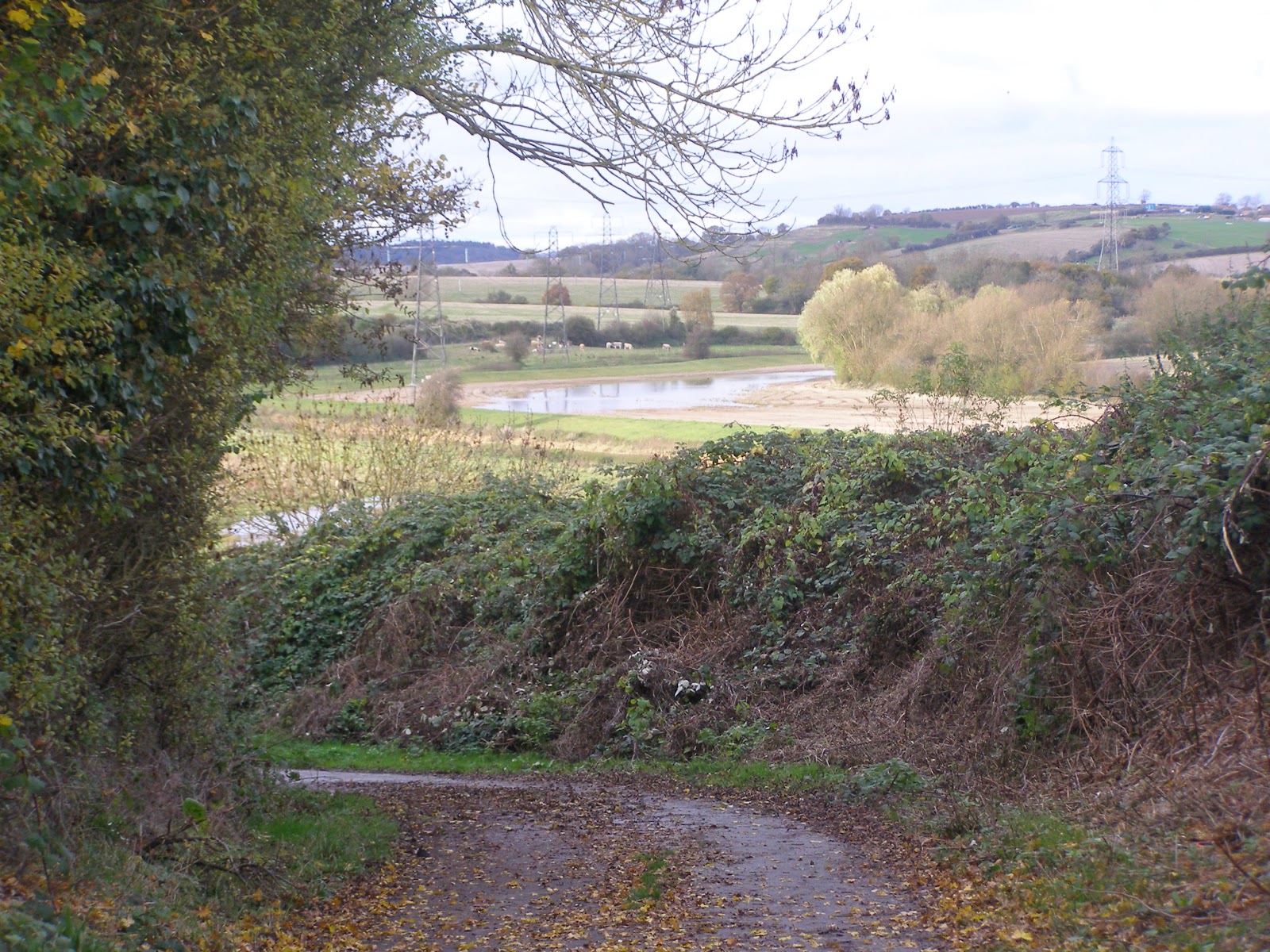
Today there was time for my favourite walk of all with Frodo...

We started off at Over Farm (owned by distant cousins of mine),


... passing the now wild strawberry fields, leaves turned autumn red...


... up the lane towards the scary oak...


...  furry Old Man's Beard in the hedge...


... and, unexpectedly, masses of spindle berries, (I had to look them up)...


Naughty, waggy-tailed Frodo ran ahead into the woods, only stopping to look back and then run on...


... loving the sun shining onto a maple tree...


... and highlighting Gloucester Cathedral, a heavenly building pointing up to heaven ...


We were ten minutes late picking up Alex from school, but, it was worth it.


Friday, 13 July 2012

Beauty, William Morris and the Cotswolds


Yesterday it didn't rain... (for a couple of hours) so I took a break from washing bedding, picking up stuff off Alex's floor until I could actually see the floor, hoovering the stairs, etc, and Abby Frodo and I went for a walk. Gloucester is just on the edge of one of England's prettiest regions, called the Cotswolds. The Cotswolds is a range of gentle hills, mostly countryside, dotted with honey-coloured stone cottages and ancient, sweet villages. We went to Bibury, which is one of the best-known and most-visited villages. It has a clear, wide stream flowing along its main street and past rows of cottages, with ducks, and yesterday even adorable ducklings floating along, and you can see large spotted trout down in the water. We are fortunate to live close to such a beautiful part of England and look forward to exploring it more...


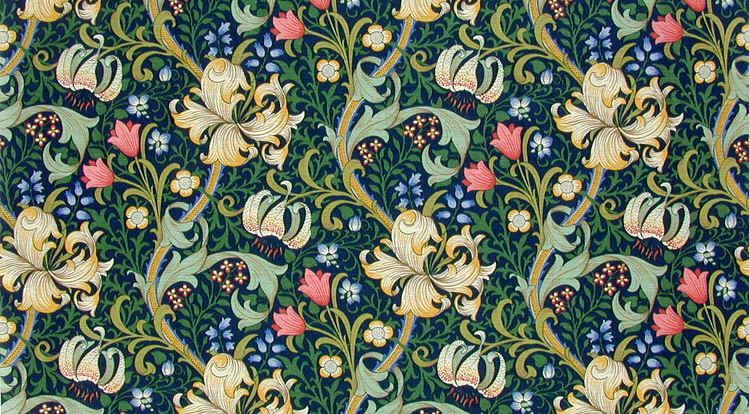
Apparently the famous artist, poet and designer William Morris once called Bibury "the prettiest village in England." William Morris created the most beautiful designs, so he must know. I used to have William Morris posters up on my bedroom walls, - in the days when I used to have arty posters on my walls. I've grown up loving his work but not knowing much about him. He lived from 1834 - 1896 and was one of the leaders of the "Arts and Crafts" design movement.

William Morris wallpaper designs


This is an excerpt I pinched from a website about him:

William Morris 1834 - 1896

Poet, artist, conservationist, craftsman, calligrapher, printer, socialist and "dreamer of dreams": William Morris was all of these and more. Born in 1834, much of Morris' life was influenced by the Cotswold countryside. Kelmscott Manor near Lechlade, not far from Bibury, became his country home from 1871 until his death in 1896. Kelmscott played an important part in his life and can still be visited today.
Morris was one of the leaders of the Arts & Crafts Movement which flourished from 1850 - 1920 and spread across Europe and North America. Many of his followers remained in the Cotswolds, and this tradition is still alive today, and inspiration for artists and craftworkers in the countryside.