When we moved back to England two years ago, I was keen to become an ethical shopper. Using farmers' markets, and seasonal eating, were two of my goals. But I soon found out that farmers' markets are really expensive. And, the children won't tolerate eating root vegetables all winter. They want peas and beans, and they won't eat cabbage or leeks. So, it is not easy.
The questions that compete for my attention and exhaust me, when I do the weekly shop include:
is this locally produced?
if not how far away is it from?
if it is from the developing world, is it fair traded?
is it cheap/reasonable?
is it on special offer?
is it packed in too much packaging?
is the glass bottle more environmentally friendly than the plastic one, given that both can be recycled?
if it is an animal product, was the animal well-treated?
is it healthy?
does it contain natural ingredients?
is the two for one deal really money-saving? If so, can we eat two of these packs before they go off (if not, you have just wasted stuff)
is the larger size really more economical than the smaller size, and if so ditto to the above - can we use that much before it goes off?
I end up weighing these factors against each other - so for example, I will buy the New Zealand lamb over the British, if it is on special offer - and I'll buy the yoghurts with loads of plastic wrapping, if the two for one deal is on - yes, money does usually end up winning the day.
Trouble is, I want to be an ethical shopper. But, it just costs more. And I feel as though I should be spending less on our food, not more. Aren't we meant to be good stewards of our money? And isn't it wrong to spend more money than necessary on food when other people are going hungry? But then again, I want to be good to the environment, not see food-producers exploited, and eat healthy food, and not eat chickens that lived in a battery, and so on. This is why I say, it is murky!
In our home group discussion on this subject last week, we also learned some surprising facts that threw more spanners into the works. For example, New Zealand lamb actually has less of a carbon footprint than British in spite of the long journey to get here - because British lamb has had more energy spent on feeding and raising it in our cold climate. So one of my food lynch-pins - "local is best" turns out not to be true. But on the other hand, British farmers need all the support they can get, so maybe it is true. But on the other hand, if we all stopped eating NZ lamb, would that damage their livelihood? Which is more important, the carbon footprint of the food, or the livelihood of the British farmers? Or the NZ farmers? Help!
Our conclusion as a group was, there is no set of clear principals, but, it is all just - murky.
We did agree that in spite of all of us being on a tight budget, we should be prepared to spend more money on some things, and in particular, our meat - buying it from local butchers, and so maybe we will eat less of it, but, it will be healthier. And we should eat seasonally - meaning that local vegetables bought when they are in season, are bound to be the healthiest and cheapest option. And, there is nothing wrong with having some frozen peas in the freezer! And, buying tea from India is fine but it should be fair traded, because we can't grow it here. But just because something says it is fair trade does not mean that it always is - so, we should try to be up on these things.
Shopping ethically is unfortunately complicated, more expensive, and more time-consuming. But for the sake of the planet, justice, and our own health, it is worth it. So, we should try.
Showing posts with label Environment. Show all posts
Showing posts with label Environment. Show all posts
Saturday, 21 September 2013
Monday, 3 June 2013
Enough is Enough
I have just received in the post a book by John V Taylor (ordered on Amazon for 1 p plus postage!) called Enough is Enough - a book on Christians and the environment, written in 1975.
His words written so long ago now, ring frighteningly more true today:
"Excess is the subject of this book and the enemy which I shall try to invite you to fight year in and year out. It confronts us in our rich countries whichever aspect of our situation we look at - our consumption of food and our accumulation of goods, our wage claims and price rises, our waste and pollution, the concentration and congestion of our cities, our destruction of living creatures and our plunder of fuels and minerals, our expenditure on armaments and the wanton disproportion of the way we use them - excess is the word that comes continually to mind; ruthless, unbridled, unthinking excess. We are being made to expect too much. We are taking too much. We are scrapping too much. We are paying, and compelling others to pay, far too high a price."
He wrote that forty years ago. Was anybody listening? Is anybody listening now?
His words written so long ago now, ring frighteningly more true today:
"Excess is the subject of this book and the enemy which I shall try to invite you to fight year in and year out. It confronts us in our rich countries whichever aspect of our situation we look at - our consumption of food and our accumulation of goods, our wage claims and price rises, our waste and pollution, the concentration and congestion of our cities, our destruction of living creatures and our plunder of fuels and minerals, our expenditure on armaments and the wanton disproportion of the way we use them - excess is the word that comes continually to mind; ruthless, unbridled, unthinking excess. We are being made to expect too much. We are taking too much. We are scrapping too much. We are paying, and compelling others to pay, far too high a price."
 |
| Image from greenplanetethics.com |
He wrote that forty years ago. Was anybody listening? Is anybody listening now?
Monday, 27 May 2013
Rookie Gardener
 So I have tried to "put my money where my mouth is," inspired by Barbara Kingsolver, and started growing vegetables! (One of the Great British Traditions...) Our kind friends Simon and Andrea have two allotments just near our house, and they gave me some space in one of them to have a go. It has been so fun. I am growing tomatoes, peas, carrots, courgettes, squash, spinach, red peppers, herbs and lettuce. Well, so far they are all just babies, but I am quite optimistic.
Allotments are large spaces given over to strips of plots for growing stuff. They are owned and rented out by the local council, and if you rent one, it is a serious business - you have to keep it cultivated and tidy, and not be noisy and so on. Each person has their own shed complete with tea kettle and tools (I'm guessing), and they do take it quite seriously.

This is my little section. OK it looks a bit messy, but, they all do:
 |
| My courgettes, so far, my proteges. |
 |
| My peas, small but perfect... |
1. Producing some food (even if only a bit), as well as just consuming, seems to be a good thing to do. Makes me feel I am doing my tiny bit.
2. It it is great excuse to be out of doors in the fresh air for a couple of hours.
3. It is a great way to be on my own for a while, in the peace and quiet, but not "inside my head," as it is physically busy and requires some thought but not too much. ie, it is the perfect escape!
4. It is exercise. I need it.
5. I can grow my favourite veggies.
6. It will save me money, a bit, when I actually harvest something.
7. Working with the earth to make it produce green shoots, leaves, flowers and fruit, being part of creation, working with the creator, is all just very satisfying.
8. Having young plants to tend is like having a hundred beautiful babies to look after, although thankfully different, as they don't cry, and they don't have names. But going to check on them, water them, remove insects and encroaching weeds, and look for their new leaves, does satisfy that nurturing impulse.
9. For me, it is a new thing to learn, a new if small challenge, which I enjoy.
10. It is great to take the children there and let them learn about growing things. They enjoy it too, so far!
I really can't recommend it enough...
Saturday, 16 March 2013
Small, step-wise changes

We cherish our fossil-fuel driven conveniences, such as the computer I am using to write these words. We can't exactly name-call this problem, or vote it away. The cure involves reaching down into ourselves and pulling out a new kind of person. The practical problem is, of course, how to do that. It's impossible to become a fuel purist, and it seems like failure to change our ways only halfway, or a pathetic ten per cent. So why even try? When the scope of the problem seems insuperable, isn't it reasonable just to call this one, give up, and get on with life as we know it?
... This is a now or never kind of project. But a project, none-the-less. Global-scale alteration from pollution didn't happen when human societies started using a little bit of fossil fuel. It happened after unrestrained growth, irresponsible management, and a cultural refusal to assign any moral value to excessive consumption. Those habits can be reformed. They have been reformed several times in the past. In the last century we've learned that some of our favourite things like DDT and the propellants in aerosol cans were rapidly unraveling the structure and substance of our biosphere. We gave them up, and reversed the threats. Now the reforms required are more systemic, and nobody seems to want to go first...
I share with almost every adult I know this crazy quilt of optimism and worries, feeling locked into certain habits but keen to change them in the right direction. And the tendency to feel like a jerk for falling short of absolute conversion I'm not sure why. If a friend had a coronary scare and started exercising three times a week, who would hound him about the other four days? These earnest efforts might just get us past the train-wreck of the daily news... searching out redemption where we can find it: recycling or car-pooling or growing a garden, or saving a species or something. Small, step-wise changes in personal habits aren't trivial. Ultimately they will, or won't, add up to having been the thing that mattered.
Barbara Kingsolver, Animal, Vegetable, Miracle, (London, Faber and Faber Ltd, 2007) pp 345-6.
Tuesday, 29 January 2013
Animal, Vegetable, Miracle - Barbara Kingsolver
 Two of my favourite topics combined - yay! Food and the environment. So now I have another hero, Barbara Kingsolver. Actually, I have loved her books for years - you all know The Poisonwood Bible which stands out from the rest. If you haven't read it, you must. Just recently I read her latest book, Flight Behaviour, which is a wonderful read, and I think second best to Poisonwood Bible. Talking to a friend about that book, she asked me if I had read Animal, Vegetable, Miracle, and raved about it - so I got hold of a copy, and it is so far amazing.
Anyone who read The Dirty Life, about a couple who take up farming, will love this one as well.
Barbara Kingsolver and her family move from Tucson, Arizona, to southern Appalacia to farm their land there, because of the realisation that living in the middle of the desert means that every drop of food and water that crosses their lips has been driven, trucked or flown a very long way to sustain them there. The cost in energy and the damage to the planet for humans to live in Tucson is massive (there are some statistics) and they made a decision as a family to live where their food can be and is grown.
The book tells how they spent a year trying to live on food that is grown around them - food that they know exactly where it comes from and who grew it. They have their own farm and they grew a lot themselves; the book has seasonal recipes for cooking when you have a glut - though I wish there were more recipes in it.
Among the points the author makes in the introductory chapters are two that struck me. One is that by eating locally-produced food you are saving so much of the energy that goes into transporting it (she refers to "oily food.") Another is that regions where people have a strong food culture depending on local produce usually have the most delicious diets, and are the healthiest. She mentions Italy, France, Japan, among others. So she sees a need for the US to develop its own new culture of food based on traditional and local foods. Of course Britain does not get a mention - we do have traditional foods but I am not sure they live up to France and Italy's...! But nor has our diet become as badly commercialised as in the US, yet (thinking of portion size and additives).
I am enthusiastic about the idea of becoming a "locavore". I even talked with a friend about sharing their communal allotment this year!! It makes so much sense. However there are a lot of problems associated with it and I have some reservations. One is, growing your own food, canning food, and cooking everything from scratch is very time-consuming. Two, buying vegetable and meat from farmers' markets (which are everywhere now) is extremely expensive and we are living on a limited budget. Three, so many things have to be imported - can I manage without not only coffee but tea as well? Chocolate? Bananas? Wine? Pasta? Rice? Will potatoes be enough?? And a related point, don't countries depend to some extent on other countries buying their produce? If the UK stopped importing tea, wouldn't India have a financial crisis? So how can this theory be completely right? Of course Fair Trade is a good way to go and might be the answer to that. But it is complex: the carbon footprint is still there.
So, I will end up with some compromise version as usual and maybe just make myself feel a bit better... But, it will be a way to make myself try some new recipes and lose some weight... and, every little helps, right? And maybe if everyone did that little bit, it would make a difference.
As usual, I'd love to know anyone's thoughts...
Tuesday, 15 May 2012
Leftovers --- yummy!
Reading an article in the esteemed Saturday Mail... so this MUST be true...! Apparently the average family in Britain dumps food worth 680 pounds per year (= about 2.5 million USh). Britain as a nation throws away enough food annually to fill Wembley Stadium nine times over per year, or, 7.2 millions tons of food, worth 12 billion pounds. Apparently 5 million potatoes get thrown away every day. How they counted them I have no idea... But according to this paper, most of the food thrown away is fruit and veg, bread and other perishables which have gone off.
The point of the article is to announce that a new food packaging has been invented and is being used by some supermarkets already, made of natural substances, which allows moisture to escape and so prevents the food going mouldy, so that it stays fresh and edible for longer. It is made by a firm called EVAP. It does sound great. Bring it on!
My thought was, "How can we waste so much food?!!"
I don't throw away much at all, and my fridge is usually cluttered with little pots of leftovers which Dan usually eats (!) Not sure if that is good... but if the leftovers could go towards another proper meal, it would a) save us money b) use less resources c) waste less - which is good in itself isn't it?
So I thought I would put down here a couple of things I do with leftovers, and if anyone has any good recipes/ideas for using leftovers constructively, other than just microwaving them later, please tell me.
Uneaten bread crusts and any ends of loaf which have gone stale I put in the freezer, and use them for breadcrumbs another time, usually to put into meatloaf or hamburgers. Or for "stuffing" (dressing). I have recently revived a chocolate bread and butter pudding recipe which is really great as well for using slightly stale bread. And is yummy!
Leftover mashed potatoes can be refried as a patty in a frying pan, and if there is any leftover cooked green vegetable at the same time, you can chop it up, and mix it into the mashed potatoes before frying - that makes an old British favourite called "Bubble and Squeak" and is actually really delicious!
Promise!
I use leftover rice by cooking it in a frying pan with a beaten egg and any veggies, as fried rice.
Any bits of vegetables left in the bottom section of the fridge can be cooked up together in stock and blended for soup - known as "Bottom of the River" soup by a friend's mum.
Leftover baked or boiled potatoes get cut up into chunks and used in Spanish omelette which we all love. Leftover sausages/ frankfurters get sliced and put on pizza.
I would love to hear any other good ideas for using leftovers... Saving the planet one leftover potato at a time!
Tuesday, 8 May 2012
Cow-parsley and buttercups...
We have just endured about ten rainy days in a row - talk about April showers. April inundations more like. The reports said it was the wettest April in England since records began - but I feel as though I have heard that so many times before... But yesterday afternoon it cleared up and today was beautiful, sunny, clear blue skies, and England felt so clean and the air felt fresh, so that breathing it in was like taking long drinks of water.

Frodo gives me the perfect excuse to put off the housework and other jobs and go out walking in the lanes and fields around Gloucester. This daily amble in the countryside in the company of a friendly animal is reminding me so much of my childhood when I used to ride my pony off into the woods after school every day. In my teenage years I spent hours with Saxon and later Lucky, riding through the woods or on the moors, sometimes with another friend but often on my own. I remember soaking in nature, and talking away to myself in my head, day-dreaming, singing if I was sure no-one was around, talking aloud to the pony who twitched his ears forward and back and nodded his large head agreeably. I was never bored, never lonely. I loved those hours and hours of being outdoors in the peace and in nature.
I think I had forgotten in the interim how much I relished that solitude and freedom, and trees and fields and streams and toadstools and foxes and moss-covered rocks and ferns and flowers and clouds and sky. As a student and then in my working life in England and then Africa, I was hardly ever alone really - my work and home was always in community, and I have always had quite a lot going on socially even though I wouldn't say I had particularly many friends (- although always enough). I remember when we were drawing pictures of ourselves in early days at UCU in Louise's expat women's fellowship, drawing a picture of a hornbill in a tree and saying, "I like to get away into nature" - but I hardly ever actually did it. Although when at one point in the middle of our time I got over-busy in Mukono, I did try to go up monkey hill once a week and sit on a rock and watch birds and have a prayer time.
Walking with Frodo over the last two weeks has re-opened my eyes to the sheer pleasure of rambling past the cow-parsley and buttercup filled hedges, hearing birds singing, seeing rabbits bounce away into the grass, talking to the dog, communicating with God, just "being," surrounded by nature. I love this world God made. I think I'm going to turn into a crazy old lady, - and I might do it soon!
Sunday, 29 April 2012
Still washing zip lock bags...
Yesterday evening I laughed at myself as I realised I was busy washing up a zip lock bag to reuse for probably the hundredth time. In fact it was one that I had brought back from Uganda in the container! I did only bring the ones that were in pretty good shape, not the cloudy, sticky ones...
But even though I chuckled, I can't see any reason to stop reusing them. One thing I did put my foot down about, years ago, was the habit of my very first housemate in the missionary life, a 60-something American lady called Doris, who insisted that we wash clingfilm (plastic foodwrap) to reuse it. This is almost impossible - when you put it in the sink it goes into a tight thin stuck-together string, and then you have to tease it out into a square again, somehow scrub it, and then stick it up on the tiles to dry. When it has dried it never has its same useful stretchy tension anyway. What a pain! I vowed that after I stopped living with Doris I would never do that again, ever.
I am wondering what other "missionary" habits I have not yet lost. I keep teabags on a little dish in case I might reuse them - although often they end up just being thrown away. I tear the many letters from the children's schools into quarters and use the backs for my shopping lists. I keep every plastic tub and ice cream box to use as storage containers. I still clip the picture side off cards we receive, and recycle them to write notes to people on, or to make new birthday cards with. Recycling was invented by missionaries, after all.
On a different note, one habit I think I might never lose is when out of the corner of my eye I catch sight of a shadow moving or a bit of dust blowing. I still always look quickly again, poised, in case it is a cockroach. But here, thank goodness, it never is. (The ones that came over in our container didn't survive, it seems!)
Tuesday, 17 April 2012
Grus grus
Any guesses what grus grus means?! Definitely doesn't sound like a bird, but, it is.

One of the most interesting projects there is the reintroduction of grus grus (in the picture) - the Common Crane. They are a similar size and like a less flamboyant version of the Crested Crane in Uganda. Apparently they used to be found all over England's and Europe's waterways, but they had become extinct. One reason was that they are delicious and were served at human feasts. At Slimbridge the wardens are succeeding in breeding and rearing them and setting them free in various parts of England.

In order to persuade the chicks to behave like grown-up cranes, and not to identify with the human wardens, the wardens have to dress up as cranes, and use a wooden painted crane head to show the chicks how to forage and peck up seeds. Fabulous.

On Saturday we went to a bird sanctuary at Slimbridge just outside Gloucester, now called the Wildfowl and Wetlands Trust, and we took out a family membership for the year. It is a long-running project to preserve and in some cases revive both the wetland environment and the birdlife that goes with it. They have flocks of flamingos, swans, zillions of ducks, including some rare endangered ones, in a series of lakes and ponds with wooden boardwalks around them. There are also three lovely otters, and a collection of frogs, toads and newts in an aquarium area. There are voles and adorable miniature harvest mice that have very natural but enclosed environments, so that you can see them nesting and scurrying about up and down reeds and even burrowing.
Many of the birds are ringed and pinioned so that they stay and breed, but there are also many that fly in, as it is a protected environment, and either stay or pass through.

One of the most interesting projects there is the reintroduction of grus grus (in the picture) - the Common Crane. They are a similar size and like a less flamboyant version of the Crested Crane in Uganda. Apparently they used to be found all over England's and Europe's waterways, but they had become extinct. One reason was that they are delicious and were served at human feasts. At Slimbridge the wardens are succeeding in breeding and rearing them and setting them free in various parts of England.

In order to persuade the chicks to behave like grown-up cranes, and not to identify with the human wardens, the wardens have to dress up as cranes, and use a wooden painted crane head to show the chicks how to forage and peck up seeds. Fabulous.

Saturday, 18 February 2012
Good intentions...
I remember before moving to England I made quite a few resolutions, especially in the area of living green.
I was determined to buy only locally grown vegetables and meat, if possible. And to be good about recycling, using little water, to walk if we could, to buy items with little packaging, etc etc.
Some of these resolutions have been quite easy to stick to. We have a recycling waste bin which is collected from our front gate every week - into which we put all our glass, heavy plastic, cardboard, newspapers, and even batteries. We compost all our veggie waste in the back garden (haven't actually used any of it yet though and not sure if we will...) and we have our cooked food waste also collected in a different bin at the gate - we are told the town council feeds this to pigs, but I am not sure how this happens... Also at the supermarket carparks there are big recycling skips for clothes, shoes, books, cardboard boxes, glass and so on.
Keeping our electricity and water consumption low is easy in that we have to pay for every drop of both, so there is quite some motivation. I now do not run the tap while cleaning my teeth! Try not to flush unless necessary (although old habits die hard). Keep the house cooler than would really like to... I have basically stopped using our tumble dryer unless something is needed in a hurry. So, that is all going pretty well.
 Buying local food is more difficult, because of the seasons, and cost. I checked out the local farm shop - apart from the most prolific current crop it is astronomically expensive. Farmer's market in Gloucester on Fridays is the same... which is too bad. But there is a great local greengrocer's shop which sells fruit and veg really cheaply - I just don't know how he does it - but I try to shop there and only buy English-grown veggies... The problem comes when, like today, he had a kilo of the most enormous red strawberries for one pound - how could I resist? But they were certainly not grown in England... possibly Spain - I didn't ask. You will be amused to read that they were selling the big kind of passion fruit for... one pound each!! (about 3,500 USh now I think.) Alex and I just had to laugh. Local meat is easier: Gloucester is famous for its own special species of pig, the Gloucester Old Spot - and they produce wonderful sausages from it. Also beef and lamb are grown locally.
We had dinner this week with a couple who work at Redcliffe, who teach a range of hot subjects like "greening mission" (including climate change issues) and "justice, advocacy and mission" - they are pretty cool, and very brainy people... (you may blush if you're reading this!) Needless to say, I just had to ask Andy at one point, "So, um... how long do you think we have got left?" He told me that the current thinking is that we have four years to the tipping point, and then between one to three hundred years of this planet being habitable for humans, barring things changing drastically. Well, it's better than fifty years (as per James Lovelock), but it's still not much.
But they told me about an initiative which is apparently world-wide, but which I had never heard of, called the Transition Network, and Transition Towns. I will try to add a link...www.transitionnetwork.org It is really interesting.
Apparently member groups run local projects including workshops on gardening, textiles and so on, and do things like insulating homes, "draught-busting," tree-planting, putting up solar panels, use art and theatre, school visits, and even in some places they have introduced local currency which can only be spent in participating local shops and businesses, so that money stays in the community. There is a town near us which has its own currency - the "Stroud Pound". What a brilliant idea.
The idea is to build community and find ways as communities to transition towards using less carbon and being better prepared for having less energy in the future. Sadly I looked up the Gloucester group, and no-one has posted on their website for about a year. Shame. But I might make contact with them. Apparently they are all over the world. What about Mukono becoming a Transition Town? I nominate Mark Bartels as leader, as he already does half these things!
I was determined to buy only locally grown vegetables and meat, if possible. And to be good about recycling, using little water, to walk if we could, to buy items with little packaging, etc etc.
Some of these resolutions have been quite easy to stick to. We have a recycling waste bin which is collected from our front gate every week - into which we put all our glass, heavy plastic, cardboard, newspapers, and even batteries. We compost all our veggie waste in the back garden (haven't actually used any of it yet though and not sure if we will...) and we have our cooked food waste also collected in a different bin at the gate - we are told the town council feeds this to pigs, but I am not sure how this happens... Also at the supermarket carparks there are big recycling skips for clothes, shoes, books, cardboard boxes, glass and so on.
Keeping our electricity and water consumption low is easy in that we have to pay for every drop of both, so there is quite some motivation. I now do not run the tap while cleaning my teeth! Try not to flush unless necessary (although old habits die hard). Keep the house cooler than would really like to... I have basically stopped using our tumble dryer unless something is needed in a hurry. So, that is all going pretty well.
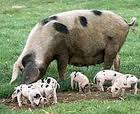 Buying local food is more difficult, because of the seasons, and cost. I checked out the local farm shop - apart from the most prolific current crop it is astronomically expensive. Farmer's market in Gloucester on Fridays is the same... which is too bad. But there is a great local greengrocer's shop which sells fruit and veg really cheaply - I just don't know how he does it - but I try to shop there and only buy English-grown veggies... The problem comes when, like today, he had a kilo of the most enormous red strawberries for one pound - how could I resist? But they were certainly not grown in England... possibly Spain - I didn't ask. You will be amused to read that they were selling the big kind of passion fruit for... one pound each!! (about 3,500 USh now I think.) Alex and I just had to laugh. Local meat is easier: Gloucester is famous for its own special species of pig, the Gloucester Old Spot - and they produce wonderful sausages from it. Also beef and lamb are grown locally.
We had dinner this week with a couple who work at Redcliffe, who teach a range of hot subjects like "greening mission" (including climate change issues) and "justice, advocacy and mission" - they are pretty cool, and very brainy people... (you may blush if you're reading this!) Needless to say, I just had to ask Andy at one point, "So, um... how long do you think we have got left?" He told me that the current thinking is that we have four years to the tipping point, and then between one to three hundred years of this planet being habitable for humans, barring things changing drastically. Well, it's better than fifty years (as per James Lovelock), but it's still not much.
But they told me about an initiative which is apparently world-wide, but which I had never heard of, called the Transition Network, and Transition Towns. I will try to add a link...www.transitionnetwork.org It is really interesting.
Apparently member groups run local projects including workshops on gardening, textiles and so on, and do things like insulating homes, "draught-busting," tree-planting, putting up solar panels, use art and theatre, school visits, and even in some places they have introduced local currency which can only be spent in participating local shops and businesses, so that money stays in the community. There is a town near us which has its own currency - the "Stroud Pound". What a brilliant idea.
 |
| The man on this note is Laurie Lee, author of "Cider with Rosie," who was born in Stroud. |
Subscribe to:
Posts (Atom)