"How do you encourage people to keep their hope," Joan (Kingsolver's friend) asked, "but not their complacency?"She was involved that spring in producing a film about global climate change, and preoccupied with striking this balance. The truth is so horrific: we are marching ourselves to the maw of our own extinction. An audience that doesn't really get that will amble out of the theatre unmoved, go home and change nothing. But an audience that does get it may be so terrified they'll feel doomed already. They might walk out looking paler, but still do nothing. How is it possible to inspire an appropriately repentant attitude towards a planet that is really, really upset? ...
We cherish our fossil-fuel driven conveniences, such as the computer I am using to write these words. We can't exactly name-call this problem, or vote it away. The cure involves reaching down into ourselves and pulling out a new kind of person. The practical problem is, of course, how to do that. It's impossible to become a fuel purist, and it seems like failure to change our ways only halfway, or a pathetic ten per cent. So why even try? When the scope of the problem seems insuperable, isn't it reasonable just to call this one, give up, and get on with life as we know it?
... This is a now or never kind of project. But a project, none-the-less. Global-scale alteration from pollution didn't happen when human societies started using a little bit of fossil fuel. It happened after unrestrained growth, irresponsible management, and a cultural refusal to assign any moral value to excessive consumption. Those habits can be reformed. They have been reformed several times in the past. In the last century we've learned that some of our favourite things like DDT and the propellants in aerosol cans were rapidly unraveling the structure and substance of our biosphere. We gave them up, and reversed the threats. Now the reforms required are more systemic, and nobody seems to want to go first...
I share with almost every adult I know this crazy quilt of optimism and worries, feeling locked into certain habits but keen to change them in the right direction. And the tendency to feel like a jerk for falling short of absolute conversion I'm not sure why. If a friend had a coronary scare and started exercising three times a week, who would hound him about the other four days? These earnest efforts might just get us past the train-wreck of the daily news... searching out redemption where we can find it: recycling or car-pooling or growing a garden, or saving a species or something. Small, step-wise changes in personal habits aren't trivial. Ultimately they will, or won't, add up to having been the thing that mattered.
Barbara Kingsolver, Animal, Vegetable, Miracle, (London, Faber and Faber Ltd, 2007) pp 345-6.
"The Returnee..."
We are in the middle of a roller coaster of transition. We left Uganda on 1st July, and travelled to visit Dan's family in America... Now we arrive in England, where I have not lived since 1992, almost twenty years ago... I left young free and single, and return with an American husband and two children, aged 11 and 9... I hope to describe the experiences of "the Returnee", with, no doubt, flashbacks to our African life, and commentary from my children along the way...
Showing posts with label recycling. Show all posts
Saturday, 16 March 2013
Thursday, 19 July 2012
A Warning...
When we were first setting up home here, we went mad for car-boot sales - which are like massive garage sales or second-hand flea markets. You can find everything at them, from ancient bikes, fishing rods, good quality second-hand furniture, books, clothes, plants, hamster cages... One day, we came away with a large brown bean-bag, a pedal-bin for the bathroom and a "tall boy" (wardrobe) for Alex - all items we specifically had gone to look for.
But we also learned a couple of lessons about false economy... For example, we bought a cd player for ten pounds - and when we got it home it had an awful squeak. But there's no come-back on electrical items bought at car-boot sales, so we just had to put that down to experience.
Another item we bought was a microwave, for fifteen pounds. We were right at the end of the day, and when I opened it I commented that we were getting some free dinner with it, as it had brown splashes all over the bottom. The seller actually said, "Oh I'm selling these things for my elderly mother - that was probably her tomato soup..." - without apologising for leaving it dirty! But we bought it in any case. When I cleaned it up at home, I found out that under one large splodge of soup was, in fact, a patch of rust. So they had probably splashed the soup on there on purpose... We decided to use it anyway, and it worked perfectly well.
However, recently an electrician came to check all the cables and sockets etc in our office at WTC. He failed the microwave oven there, as it was emitting too much radiation according to his little geiger counter thingy... So I told him about our microwave story, and he immediately made all kinds of tutting noises and told me that we should be very wary of rust in a microwave - as rust can allow the microwaves to leak out... Oops.
So today Dan and I took our bargain microwave to the city dump.
Going to "the tip" as it is called here, was like driving onto the set of Wall-E - but with different sections for every imaginable kind of waste - and large signs promising that they recycle 75 % of all household waste there which is good to know. But the microwave we had to hurl into a metal cage for "Metal waste" - to be squashed down by huge steel teeth and buried. So, no microwave popcorn for now, and I'll have to remember to take the bread out of the freezer in good time - until we find another dodgy old microwave, that is.
Tuesday, 15 May 2012
Leftovers --- yummy!
Reading an article in the esteemed Saturday Mail... so this MUST be true...! Apparently the average family in Britain dumps food worth 680 pounds per year (= about 2.5 million USh). Britain as a nation throws away enough food annually to fill Wembley Stadium nine times over per year, or, 7.2 millions tons of food, worth 12 billion pounds. Apparently 5 million potatoes get thrown away every day. How they counted them I have no idea... But according to this paper, most of the food thrown away is fruit and veg, bread and other perishables which have gone off.
The point of the article is to announce that a new food packaging has been invented and is being used by some supermarkets already, made of natural substances, which allows moisture to escape and so prevents the food going mouldy, so that it stays fresh and edible for longer. It is made by a firm called EVAP. It does sound great. Bring it on!
My thought was, "How can we waste so much food?!!"
I don't throw away much at all, and my fridge is usually cluttered with little pots of leftovers which Dan usually eats (!) Not sure if that is good... but if the leftovers could go towards another proper meal, it would a) save us money b) use less resources c) waste less - which is good in itself isn't it?
So I thought I would put down here a couple of things I do with leftovers, and if anyone has any good recipes/ideas for using leftovers constructively, other than just microwaving them later, please tell me.
Uneaten bread crusts and any ends of loaf which have gone stale I put in the freezer, and use them for breadcrumbs another time, usually to put into meatloaf or hamburgers. Or for "stuffing" (dressing). I have recently revived a chocolate bread and butter pudding recipe which is really great as well for using slightly stale bread. And is yummy!
Leftover mashed potatoes can be refried as a patty in a frying pan, and if there is any leftover cooked green vegetable at the same time, you can chop it up, and mix it into the mashed potatoes before frying - that makes an old British favourite called "Bubble and Squeak" and is actually really delicious!
Promise!
I use leftover rice by cooking it in a frying pan with a beaten egg and any veggies, as fried rice.
Any bits of vegetables left in the bottom section of the fridge can be cooked up together in stock and blended for soup - known as "Bottom of the River" soup by a friend's mum.
Leftover baked or boiled potatoes get cut up into chunks and used in Spanish omelette which we all love. Leftover sausages/ frankfurters get sliced and put on pizza.
I would love to hear any other good ideas for using leftovers... Saving the planet one leftover potato at a time!
Sunday, 29 April 2012
Still washing zip lock bags...
Yesterday evening I laughed at myself as I realised I was busy washing up a zip lock bag to reuse for probably the hundredth time. In fact it was one that I had brought back from Uganda in the container! I did only bring the ones that were in pretty good shape, not the cloudy, sticky ones...
But even though I chuckled, I can't see any reason to stop reusing them. One thing I did put my foot down about, years ago, was the habit of my very first housemate in the missionary life, a 60-something American lady called Doris, who insisted that we wash clingfilm (plastic foodwrap) to reuse it. This is almost impossible - when you put it in the sink it goes into a tight thin stuck-together string, and then you have to tease it out into a square again, somehow scrub it, and then stick it up on the tiles to dry. When it has dried it never has its same useful stretchy tension anyway. What a pain! I vowed that after I stopped living with Doris I would never do that again, ever.
I am wondering what other "missionary" habits I have not yet lost. I keep teabags on a little dish in case I might reuse them - although often they end up just being thrown away. I tear the many letters from the children's schools into quarters and use the backs for my shopping lists. I keep every plastic tub and ice cream box to use as storage containers. I still clip the picture side off cards we receive, and recycle them to write notes to people on, or to make new birthday cards with. Recycling was invented by missionaries, after all.
On a different note, one habit I think I might never lose is when out of the corner of my eye I catch sight of a shadow moving or a bit of dust blowing. I still always look quickly again, poised, in case it is a cockroach. But here, thank goodness, it never is. (The ones that came over in our container didn't survive, it seems!)
Saturday, 18 February 2012
Good intentions...
I remember before moving to England I made quite a few resolutions, especially in the area of living green.
I was determined to buy only locally grown vegetables and meat, if possible. And to be good about recycling, using little water, to walk if we could, to buy items with little packaging, etc etc.
Some of these resolutions have been quite easy to stick to. We have a recycling waste bin which is collected from our front gate every week - into which we put all our glass, heavy plastic, cardboard, newspapers, and even batteries. We compost all our veggie waste in the back garden (haven't actually used any of it yet though and not sure if we will...) and we have our cooked food waste also collected in a different bin at the gate - we are told the town council feeds this to pigs, but I am not sure how this happens... Also at the supermarket carparks there are big recycling skips for clothes, shoes, books, cardboard boxes, glass and so on.
Keeping our electricity and water consumption low is easy in that we have to pay for every drop of both, so there is quite some motivation. I now do not run the tap while cleaning my teeth! Try not to flush unless necessary (although old habits die hard). Keep the house cooler than would really like to... I have basically stopped using our tumble dryer unless something is needed in a hurry. So, that is all going pretty well.
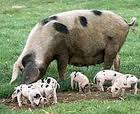
Buying local food is more difficult, because of the seasons, and cost. I checked out the local farm shop - apart from the most prolific current crop it is astronomically expensive. Farmer's market in Gloucester on Fridays is the same... which is too bad. But there is a great local greengrocer's shop which sells fruit and veg really cheaply - I just don't know how he does it - but I try to shop there and only buy English-grown veggies... The problem comes when, like today, he had a kilo of the most enormous red strawberries for one pound - how could I resist? But they were certainly not grown in England... possibly Spain - I didn't ask. You will be amused to read that they were selling the big kind of passion fruit for... one pound each!! (about 3,500 USh now I think.) Alex and I just had to laugh. Local meat is easier: Gloucester is famous for its own special species of pig, the Gloucester Old Spot - and they produce wonderful sausages from it. Also beef and lamb are grown locally.
We had dinner this week with a couple who work at Redcliffe, who teach a range of hot subjects like "greening mission" (including climate change issues) and "justice, advocacy and mission" - they are pretty cool, and very brainy people... (you may blush if you're reading this!) Needless to say, I just had to ask Andy at one point, "So, um... how long do you think we have got left?" He told me that the current thinking is that we have four years to the tipping point, and then between one to three hundred years of this planet being habitable for humans, barring things changing drastically. Well, it's better than fifty years (as per James Lovelock), but it's still not much.
But they told me about an initiative which is apparently world-wide, but which I had never heard of, called the Transition Network, and Transition Towns. I will try to add a link...www.transitionnetwork.org It is really interesting.
Apparently member groups run local projects including workshops on gardening, textiles and so on, and do things like insulating homes, "draught-busting," tree-planting, putting up solar panels, use art and theatre, school visits, and even in some places they have introduced local currency which can only be spent in participating local shops and businesses, so that money stays in the community. There is a town near us which has its own currency - the "Stroud Pound". What a brilliant idea.
The idea is to build community and find ways as communities to transition towards using less carbon and being better prepared for having less energy in the future. Sadly I looked up the Gloucester group, and no-one has posted on their website for about a year. Shame. But I might make contact with them. Apparently they are all over the world. What about Mukono becoming a Transition Town? I nominate Mark Bartels as leader, as he already does half these things!
I was determined to buy only locally grown vegetables and meat, if possible. And to be good about recycling, using little water, to walk if we could, to buy items with little packaging, etc etc.
Some of these resolutions have been quite easy to stick to. We have a recycling waste bin which is collected from our front gate every week - into which we put all our glass, heavy plastic, cardboard, newspapers, and even batteries. We compost all our veggie waste in the back garden (haven't actually used any of it yet though and not sure if we will...) and we have our cooked food waste also collected in a different bin at the gate - we are told the town council feeds this to pigs, but I am not sure how this happens... Also at the supermarket carparks there are big recycling skips for clothes, shoes, books, cardboard boxes, glass and so on.
Keeping our electricity and water consumption low is easy in that we have to pay for every drop of both, so there is quite some motivation. I now do not run the tap while cleaning my teeth! Try not to flush unless necessary (although old habits die hard). Keep the house cooler than would really like to... I have basically stopped using our tumble dryer unless something is needed in a hurry. So, that is all going pretty well.
Buying local food is more difficult, because of the seasons, and cost. I checked out the local farm shop - apart from the most prolific current crop it is astronomically expensive. Farmer's market in Gloucester on Fridays is the same... which is too bad. But there is a great local greengrocer's shop which sells fruit and veg really cheaply - I just don't know how he does it - but I try to shop there and only buy English-grown veggies... The problem comes when, like today, he had a kilo of the most enormous red strawberries for one pound - how could I resist? But they were certainly not grown in England... possibly Spain - I didn't ask. You will be amused to read that they were selling the big kind of passion fruit for... one pound each!! (about 3,500 USh now I think.) Alex and I just had to laugh. Local meat is easier: Gloucester is famous for its own special species of pig, the Gloucester Old Spot - and they produce wonderful sausages from it. Also beef and lamb are grown locally. We had dinner this week with a couple who work at Redcliffe, who teach a range of hot subjects like "greening mission" (including climate change issues) and "justice, advocacy and mission" - they are pretty cool, and very brainy people... (you may blush if you're reading this!) Needless to say, I just had to ask Andy at one point, "So, um... how long do you think we have got left?" He told me that the current thinking is that we have four years to the tipping point, and then between one to three hundred years of this planet being habitable for humans, barring things changing drastically. Well, it's better than fifty years (as per James Lovelock), but it's still not much.
But they told me about an initiative which is apparently world-wide, but which I had never heard of, called the Transition Network, and Transition Towns. I will try to add a link...www.transitionnetwork.org It is really interesting.
Apparently member groups run local projects including workshops on gardening, textiles and so on, and do things like insulating homes, "draught-busting," tree-planting, putting up solar panels, use art and theatre, school visits, and even in some places they have introduced local currency which can only be spent in participating local shops and businesses, so that money stays in the community. There is a town near us which has its own currency - the "Stroud Pound". What a brilliant idea.
![]() |
| The man on this note is Laurie Lee, author of "Cider with Rosie," who was born in Stroud. |
Subscribe to:
Posts (Atom)